 Field & Flame Kitchen
How to Label Venison for the Freezer
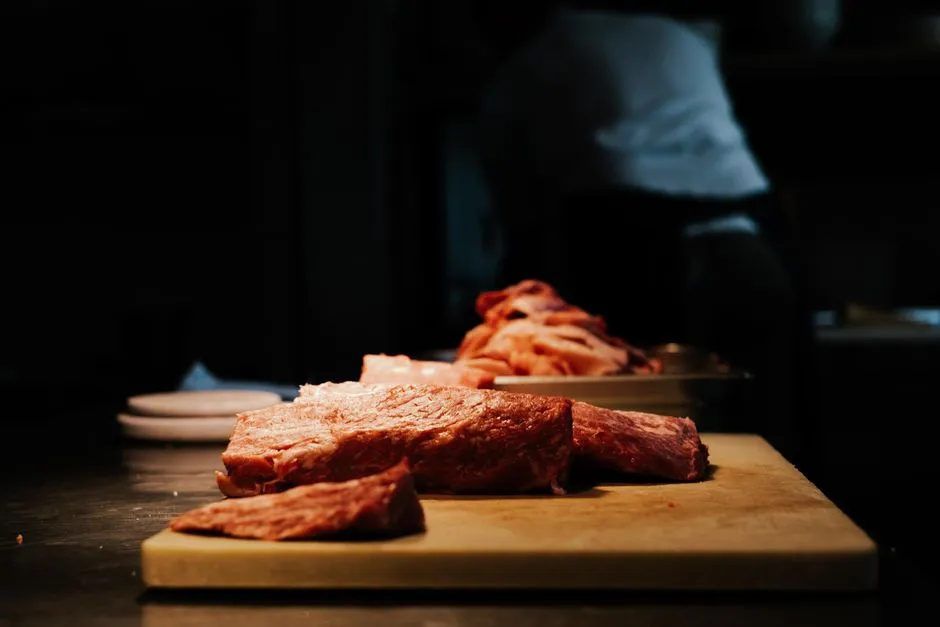
- What should a venison freezer label include?
- Which information belongs on the package?
- Why retain both a package identifier and an animal reference?
- What should the linked source record contain?
- What can CWD records establish—and what can they not?
- How does an inventory make meal planning more precise?
- How should dates guide rotation?
- What about ground blends and allergens?
- What should you do before taking a package out?
- Sources
What should a venison freezer label include?
Label venison with its species, cut or product, raw or cooked state, amount, added ingredients, packaging and freezing dates, and an identifier connecting the package to its source records. Keep relevant chronic wasting disease (CWD) test information linked to that animal. Store frozen meat at 0°F (−18°C) or below. Labels and freezing cannot make unsafe meat safe; do not consume sick, found-dead or CWD-positive animals, and refer uncertain history to wildlife, public-health or qualified processing professionals.
This guide concerns records for already processed, lawfully sourced meat. It does not teach field dressing, specimen collection, meat processing or cooking. The example below is an original household inventory model, not a record of a real harvest or a tested preservation system.
Which information belongs on the package?
A useful label answers the next cook's questions without requiring them to open the wrapping.
The National Center for Home Food Preservation's labeling guidance recommends the food name, added ingredients, packaging date, amount or servings, and the food's form. For venison, translate those general fields into precise descriptions:
| Field | Record this | Avoid this shortcut |
|---|---|---|
| Species and product | Deer venison, ground; or the identified species and cut | “Game” without identification |
| Preparation state | Raw, or the actual cooked product name | Inferring cooked status from colour or seasoning |
| Amount | Recorded net weight and number of pieces where known | Estimating meat weight from the wrapped package |
| Added ingredients | Confirmed blend, seasonings and other additions | Assuming ground venison contains nothing else |
| Dates | Separately identified packaging and freezing dates | One unexplained date |
| Source reference | Animal or supplier reference linked to retained records | A household nickname with no record behind it |
Use freezer-suitable labels or marking materials on the package exterior, following their directions. Do not obscure a processor's original label. An extra household label supplements that information; it should not replace it.
If the processor's term is unclear, ask what it means before assigning the package to a recipe. “Stew meat,” for example, is useful meal-planning information, but it does not answer every question about source, ingredients or previous handling.
Why retain both a package identifier and an animal reference?
An animal reference connects related packages. A package identifier distinguishes the individual items within that group.
An original household convention could be “SAMPLE-A/G1” for one ground-meat package and “SAMPLE-A/R1” for a roast from the same documented animal. These are illustrative codes, not official tag numbers. Write the actual official identifiers in the retained source record; never replace them with an invented equivalent.
Colorado Parks and Wildlife's CWD guidance specifically advises clear animal identification on packaged meat and separate processing and packaging when using a commercial processor. Its reason is practical: packages need to remain identifiable if a test result is positive.
That Colorado guidance is an example of jurisdiction-specific instructions, not a national possession or labeling rule. Follow the wildlife authority responsible for the harvest location and any destination requirements. A neat household inventory does not establish lawful possession, movement or donation.
What should the linked source record contain?
Keep the longer record separately from the small package label. Our suggested household record includes:
- the actual animal or supplier reference;
- the source's contact information and relevant receipt or processing paperwork;
- the species and recorded harvest, processing and freezing dates;
- what the processor says about batch identity and added ingredients;
- required or recommended testing information, the submission identifier and the actual result when available;
- any outstanding question and the appropriate authority contacted.
Retain required original documents. Store personal details privately rather than posting them with a public recipe photograph.
For Colorado submissions, CPW says to save the CWD head-tag number used to retrieve results. That is distinct from a household package code or processor order number. Keeping all three in one record can prevent searching the wrong reference later; it does not make them interchangeable.
A submitted sample is not a result. Record “pending” when that is the actual status. Where testing is being used, do not eat the meat while awaiting the result; follow the responsible agency's current instructions.
What can CWD records establish—and what can they not?
The CDC's current CWD advice says to check state wildlife and health recommendations, strongly consider testing deer or elk before eating the meat, and consider requesting individual commercial processing. Do not shoot, handle or eat animals that look sick or act strangely, or touch or eat animals found dead. Never eat meat from an animal that tests positive.
A label reading “tested” omits the essential information: which animal, which submission, what result, and when it was reported. Copy the actual result wording into the linked record instead of translating it into “safe.”
CPW cautions that no testing process assures complete diagnostic accuracy. A CWD result also does not establish that meat stayed cold, was processed hygienically, or meets a particular eater's dietary needs. Keep those questions separate.
If a result is positive, exclude the affected meat from meals and contact the relevant wildlife authority for disposition instructions. Do not create your own treatment, disposal or donation plan. Freezer organization is not disease control.
How does an inventory make meal planning more precise?
The National Center's freezer-management guidance recommends a nearby inventory recording foods and freezing dates, updated as items enter and leave. For venison, add package references and a location that means something in your own freezer.
Here is fictional arithmetic for four already wrapped packages, all linked to source record SAMPLE-A. No actual animal, test result, usable-meat clearance or recipe yield is implied.
| Package references | Description recorded | Number of packages | Recorded amount per package | Total amount | Location |
|---|---|---|---|---|---|
| SAMPLE-A/G1, G2, G3 | Raw ground deer venison; ingredient record attached | 3 | 1 lb | 3 lb | Basket A |
| SAMPLE-A/R1 | Raw identified deer roast | 1 | 2 lb | 2 lb | Basket B |
| Total | Inventory only | 4 | Not applicable | 5 lb | Two baskets |
The calculation is 3 × 1 lb + 1 × 2 lb = 5 lb. If G1 leaves the freezer, cross off that identifier: three packages remain, totaling 2 × 1 lb + 2 lb = 4 lb.
Record the destination as well as the removal date, such as “moved to refrigerator for planned cooking.” Do not leave a removed package listed as frozen. The mass recorded is the meat's stated amount, not its future cooked weight or a guaranteed number of servings.
Before selecting any package for a meal, complete the source, testing, ingredient and handling checks. An unresolved package can remain listed in the inventory with “do not use—question pending”; its presence is not permission to eat it.
How should dates guide rotation?
Keep a freezing date distinct from a harvest or packaging date. They describe different events. If a date is unknown, record “unknown”; do not use the day you wrote the label as a substitute.
Among suitable packages with verified histories, choose older stock first. That applies the National Center's rotation advice without treating age as the only selection rule. An older package with an unresolved safety issue does not become a priority dinner.
The FDA's storage guidance distinguishes frozen-food quality from safety. Proper handling and continuous frozen storage matter; freezing does not kill most bacteria. Do not turn a general freezer-quality recommendation into a date that guarantees venison is safe until then.
Maintain 0°F (−18°C) or below, checked with a freezer thermometer, and follow the appliance's instructions. A temperature reading today cannot reconstruct an unknown interruption last month. For an outage or uncertain temperature history, consult current public-health guidance rather than deciding from the label or appearance.
What about ground blends and allergens?
Retain the processor's exact ingredient information for ground blends, sausages and prepared products. “Venison” on a household label is not proof that the package contains only venison.
The FDA explains that packaged-food ingredient information and voluntary cross-contact statements serve different purposes. No “may contain” statement is not proof of no cross-contact. Ask the processor about the actual ingredients and equipment practices relevant to the diner; do not infer a free-from claim.
If ingredient details are unavailable, do not serve the product to someone whose allergy or dietary restriction requires them. Follow that person's qualified medical advice. Recording ingredients is useful, but a homemade label is not a clinical assessment or a certification.
What should you do before taking a package out?
Read the inventory with the freezer closed. Choose the exact package only after checking its record, intended recipe and thawing plan. Follow safe handling instructions; do not leave meat at room temperature while completing paperwork.
Keep original labels attached and use clean handling practices that prevent raw-meat juices from contacting ready-to-eat food. Do not open or thaw a package simply to identify an uncertain cut. Ask the source; unresolved safety questions belong with a qualified processor, cooperative-extension food-safety specialist or wildlife/public-health authority.
Our venison thawing guide covers the next stage. The game techniques collection and game recipes collection address subsequent preparation choices. Record-keeping comes first: you should know which package you selected, what it contains and which source record accompanies it.
Sources
- National Center for Home Food Preservation: packaging and labeling
- National Center for Home Food Preservation: freezer management
- CDC: chronic wasting disease
- Colorado Parks and Wildlife: CWD testing and package identification
- FDA: safe food storage
- FDA: food-allergen labeling
Frequently asked questions
What information should I write on a venison freezer label?
Record the species and cut or product, raw or cooked state, confirmed amount, added ingredients, packaging and freezing dates, and a reference to retained source records. Use freezer-suitable marking materials without obscuring the processor's original label. Record unknown details as unknown and resolve them with the source; do not invent dates or an ingredient list.
Does a CWD test number mean venison is safe to eat?
No. A number identifies a submission, not its result or the meat's overall safety. Keep the actual result associated with the correct animal and packages; do not eat while awaiting testing results. Never consume a CWD-positive animal. Follow wildlife and public-health guidance, recognizing that testing does not establish cold-chain history, hygiene or individual dietary suitability.
Should I write an expiry date on frozen venison?
Do not invent one. Retain the actual packaging and freezing dates and any applicable supplier directions. Freezer-quality recommendations are not safety guarantees. Maintain 0°F (−18°C) or below and a verified handling history; freezing does not correct unsafe meat. Refer uncertain temperature history to a food-safety specialist rather than judging from date, appearance or smell.
How do I count packages with different weights?
Record each package's identifier and stated meat amount, then total like entries. In an illustrative inventory, three 1 lb ground-meat packages and one 2 lb roast total four packages and 5 lb. Removing one ground package leaves three packages and 4 lb. This is inventory arithmetic, not a cooked yield, serving recommendation or safety clearance.
What if ground venison has added fat or seasoning?
Retain the processor's complete ingredient information and ask about relevant cross-contact practices. A label saying venison does not establish that it contains only venison or that it suits a particular allergy. If necessary details cannot be confirmed, do not serve it to someone whose dietary restriction requires them; follow their qualified medical guidance.