 Field & Flame Kitchen
Instant-Read vs Leave-In Thermometers for Venison
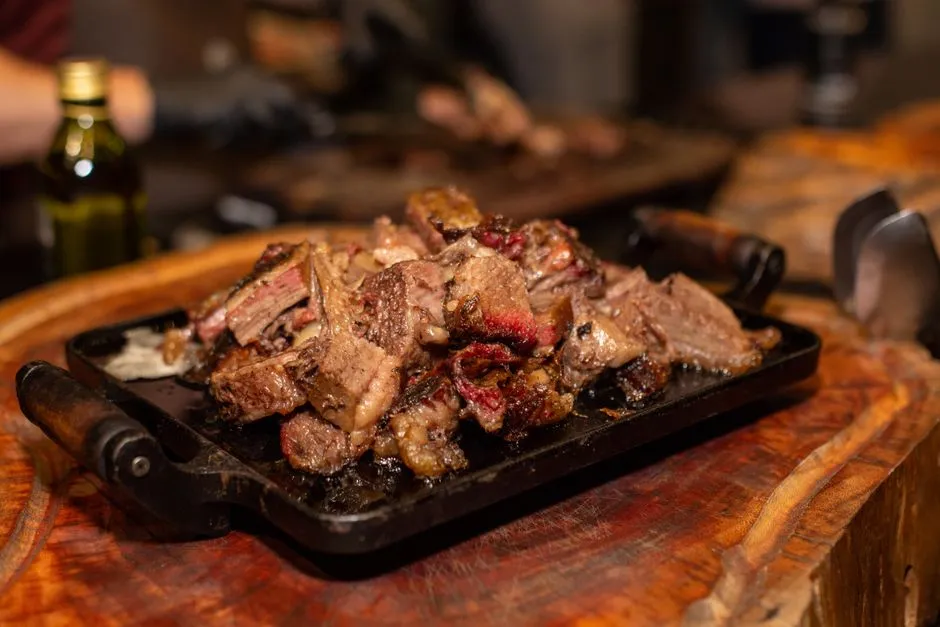
- Instant-read or leave-in: which job do you need?
- What does each type actually do?
- Why is the biggest temperature on the box misleading?
- Does a leave-in probe mean the whole device stays inside?
- Where does a useful reading come from?
- Which safety temperature belongs in the record?
- How can you compare two candidates without inventing a test?
- What care belongs beside the thermometer?
- Sources
Instant-read or leave-in: which job do you need?
An instant-read meat thermometer checks a temperature at a particular moment; an oven-rated leave-in probe monitors during cooking, with its display kept within the manufacturer's operating limits. Choose by the measurement task, not the largest advertised temperature. For venison, the U.S. FoodSafety.gov chart specifies 160°F (71°C). Neither type establishes safe handling history or makes CWD-positive meat acceptable to eat.
A thin portion and a roast do not present the same measuring problem. Before comparing screens, write down what you need to check, which appliance you will use, and whether the probe can fit correctly. Field & Flame Kitchen's comparison below is based on published documentation, not hands-on product testing or a ranking of thermometer brands.
What does each type actually do?
An instant-read instrument is useful for a spot check. An oven-compatible leave-in system lets you observe temperature over time without leaving an ordinary handheld thermometer inside the appliance. These are different jobs, not two quality grades.
K-State Extension's thermometer guide distinguishes digital instant-read, dial instant-read, oven-safe dial and corded oven-probe designs. Its examples also show why appearance alone is insufficient: some dial thermometers can remain in an oven, while instant-read dial models cannot. A digital display likewise does not establish oven compatibility.
For shopping or checking an existing tool, use this simple division:
| Your measurement question | Documentation to look for |
|---|---|
| What is the internal temperature at this location now? | Instant-read use, sensor placement and reading instructions |
| How is temperature changing at the monitored location? | Explicit leave-in approval for the appliance and compatible probe |
| Can this probe fit the food correctly? | Required insertion depth and sensing area for that exact model |
| Which parts can be exposed to heat? | Separate limits for instrument, probe, cable and handle |
This is a selection aid, not permission to use an unidentified thermometer. If the instructions are missing, obtain them from the manufacturer before cooking with it.
Why is the biggest temperature on the box misleading?
A measurement range describes temperatures the instrument can measure. An operating range is a separate specification. Treating those numbers as interchangeable can lead to inappropriate heat exposure.
For example, the current ThermoPop 2 specifications list a measurement range of -58 to 572°F and an operating range of 32 to 122°F. The page offers 4.5-inch and 8-inch probes; its specification table gives response times of 2–3 seconds and 3–4 seconds respectively. Those are manufacturer figures for those variants, not our measurements or universal definitions of “instant.”
The 4.5-inch model's operating instructions expressly exclude leaving it inside an oven. Its ability to measure a high temperature does not make the complete handheld unit oven-safe. Use the exact model instructions, rather than copying a procedure from a thermometer with a similar name.
An easy paperwork improvement is to give “measures up to” and “may be exposed to” separate lines. Never transfer a number between them to fill an unanswered question.
Does a leave-in probe mean the whole device stays inside?
No. In a corded system, the sensing probe and display have different roles and limits.
The current DOT product specification identifies a single-channel alarm thermometer using compatible Pro-Series probes. It lists a -58 to 572°F measurement range, a 32 to 122°F operating range, a maximum cable temperature of 700°F and a maximum transition/handle temperature of 644°F. These separate entries are the point of this example; the highest one is not a rating for every component.
The DOT instructions further limit the cable and handle maxima to short periods. They exclude the display housing from the oven and warn against hot-lid mounting. The probe tip must not contact flame or coals; the cable must avoid heating elements, hot racks, flame and coals. Removing the hot probe requires heat protection.
Follow both appliance and thermometer instructions for placement. If they do not establish a compatible arrangement, ask the manufacturers; do not modify an appliance or improvise cable routing. This article does not provide an installation procedure. An alarm is a prompt to check the cook, not authorization to disregard appliance supervision requirements.
Where does a useful reading come from?
Check the manufacturer's sensing-area and insertion instructions before choosing a probe for a particular portion. Probe length, insertion depth and sensing area are not interchangeable measurements. A long stem does not mean temperature is sensed along its entire length.
K-State's examples require different depths for digital and dial instant-read designs. That is a reason to read your model's instructions, not to apply one generic depth to every thermometer. The DOT manual, for example, directs placement in the food's thickest part, clear of bone or gristle.
Keep a separate entry for each portion you intend to check. A reading recorded beside “roast” should not be copied into the record for another piece simply because both went into the oven together. Record the actual observation, not the expected one.
If a reading seems inconsistent, do not average conflicting values into an assumed safe result. Check the model's placement and troubleshooting directions and contact its support service if needed. Do not use a malfunctioning instrument to justify serving meat. Calibration procedures and replacement parts are model-specific; this comparison supplies no boiling-water experiment or repair instructions.
Which safety temperature belongs in the record?
The U.S. FoodSafety.gov minimum-temperature chart explicitly lists wild or farm-raised rabbit and venison at 160°F (71°C). It separately lists leftovers at 165°F (74°C). These are internal food temperatures, not oven settings, probe durability ratings or a promise about tenderness.
Use the applicable food entry rather than borrowing another species' preferred-doneness setting from a product leaflet. Keep the published safety endpoint separate from an alarm setting; a notification alone is not evidence that the food has reached the required endpoint.
A thermometer also cannot reconstruct the meat's earlier handling. FDA handling guidance calls for refrigeration at 40°F or below and prompt chilling of perishables: within two hours, or one hour when the outside temperature exceeds 90°F. Keep raw meat separate from ready-to-eat food, and do not judge safety by color or texture. Our venison thawing guide addresses preparation before cooking; uncertain handling needs advice from a qualified food-safety professional, not a higher alarm setting.
CWD is another separate decision. CDC guidance says to check state wildlife and health recommendations and strongly consider testing deer or elk before eating them. Exclude meat from animals that test positive. Do not handle or eat animals found dead, or animals that appear sick or behave abnormally. Cooking is not a workaround for these exclusions. Keep animal identification and test records connected to packages with the freezer-label record.
How can you compare two candidates without inventing a test?
Use this original worksheet before purchase or before using equipment you already own. It is a document review, not a kitchen trial.
| Record field | Candidate A | Candidate B |
|---|---|---|
| Exact model and probe variant | Copy identifier | Copy identifier |
| Intended task | Spot check or monitoring | Spot check or monitoring |
| Source of instructions | URL and access date | URL and access date |
| Food-fit evidence | Sensor/insertion instructions | Sensor/insertion instructions |
| Heat restrictions | Record each component separately | Record each component separately |
| Cleaning and support | Relevant manual sections | Relevant manual sections |
| Unanswered compatibility question | Write the question | Write the question |
Here is a fictional paperwork example: A has a documented instant-read role; B has documented corded monitoring. The planned job is a spot check of individual portions. A's role fits that question, but its insertion instructions still need checking against the food. B's monitoring feature does not answer that missing fit question for A.
Alternatively, if the planned job requires monitoring during an oven cook, A's handheld measurement range is not evidence of leave-in suitability. B remains a candidate only if its exact probe and appliance instructions establish compatibility. “Not yet confirmed” is a useful result: send the precise missing question to support instead of filling the cell with an assumption.
Record requirements first and preferences second. A larger display or preferred button layout can be a tie-breaker after compatibility, not a substitute for it. For related preparation topics, browse game techniques.
What care belongs beside the thermometer?
Follow the exact cleaning directions for food-contact parts and electronics. ThermoPop 2's manual calls for probe cleaning after each measurement to prevent cross-contamination. DOT's manual specifies wiping its probe with a damp cloth and kitchen cleaner and cautions against immersing its cable. Do not infer dishwasher or soaking permission from a water-resistance label.
Keep sharp probes and batteries inaccessible to children. The ThermoPop manual warns that suspected swallowed or body-inserted button batteries require immediate medical attention. Store the manual where the next cook can find it; include the model and probe identifier rather than leaving only an unlabelled temperature chart.
Sources
Documentation checked September 8, 2026: K-State Extension's thermometer overview; ThermoWorks' current ThermoPop 2 and DOT product pages and linked operating manuals; FoodSafety.gov's chart, reviewed November 21, 2024; FDA's handling guidance; and CDC's CWD guidance dated January 21, 2026. Manufacturer documents support equipment descriptions, not independent performance findings or alternative venison safety endpoints.
Frequently asked questions
Can I leave an instant-read thermometer in venison while it cooks?
Do not assume that you can. Instant-read and oven-compatible leave-in designs serve different roles, and the exact instructions determine permitted use. The ThermoPop 2 manual, for example, excludes leaving the handheld unit inside an oven. A high measurement range does not override that restriction or the instrument's operating limits.
What internal temperature does the U.S. chart specify for venison?
FoodSafety.gov lists wild or farm-raised rabbit and venison at 160°F (71°C), measured internally with a food thermometer. Its separate leftovers entry is 165°F (74°C). A displayed temperature cannot establish safe prior handling or override CWD exclusions. Do not eat meat from an animal that tests positive for CWD.
Does a 700°F cable rating make the whole thermometer oven-safe?
No. A component rating does not apply to the entire device. For DOT, the published specification separates cable, handle, measurement and operating limits, while its manual keeps the display outside the oven and limits peak cable and handle exposure to short periods. Follow the exact thermometer and appliance instructions together.
Are dial and digital thermometers inserted to the same depth?
Not necessarily. K-State Extension describes different sensing-depth requirements for different thermometer designs. Consult the exact model's sensor and insertion instructions instead of using one depth for every instrument. Record probe fit separately from display preference, and ask the manufacturer about an unclear requirement before relying on the device.
Is this comparison based on tested thermometer performance?
No. This is a documentation-based comparison of measurement roles and published limits, using named manufacturer and public food-safety sources. The worksheet is an original planning aid, not a product test. It does not establish accuracy for an individual unit, appliance compatibility, safe handling history or the safety of CWD-positive meat.